3D printing for kids: what the printer actually teaches

A child finds a dragon on a model-sharing site, sends it to the printer, and waits six hours. The dragon comes out beautifully. It is a satisfying afternoon, and almost nothing has been learned, because nothing was decided.
 
Industrial 3D printing has moved well past the prototype stage, and the gap between those two versions of the activity is now very wide. In June 2026, Divergent Technologies opened a 430,000 square foot plant in Long Beach, California, that will run 64 of its own metal printers over the next two years. Each machine stands more than eight metres tall and fires twelve 2-kilowatt lasers into a bed of metal powder. Six are already running at the company’s headquarters in Torrance.
 
The machines are the least interesting part of that story. What matters is that nothing entering them was drawn for casting or machining first. Every structure is designed for the printing process from the opening sketch, then produced and assembled inside one software-controlled system. Take a part drawn for a milling machine, print it in metal, and the result is a slower, more expensive version of the same part.
 

The skill has a name

Industry calls this design for additive manufacturing. It covers questions a hobbyist never has to ask. Where will the part need support material, and can the shape be angled so it needs none? How does heat move through the geometry while it is being built? Can six bolted components become one printed piece?
 
Generative design software will propose shapes no person would draw by hand. Somebody still has to define the loads the part must survive and decide what counts as a good answer. Those judgments come from CAD, materials, and structural reasoning. The printer handles the last five percent.
 

What this looks like at home

 
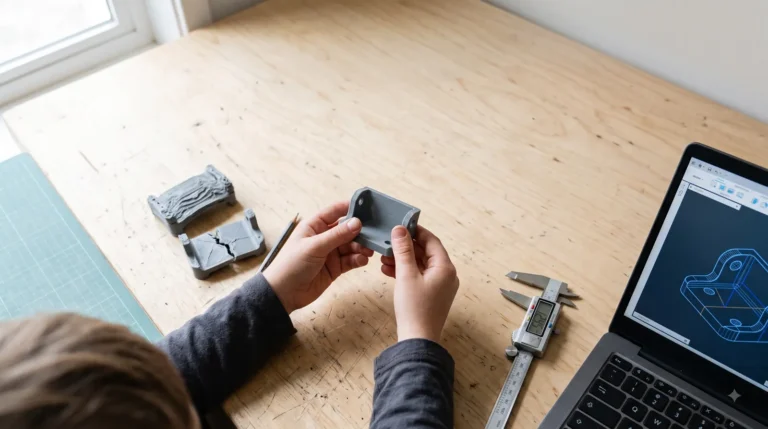
For a child, downloading and printing an STL file builds roughly the skill of operating a photocopier. The transferable learning sits in the loop around it: notice a problem worth solving, model something in CAD, print it, find out exactly where it fails, change one variable, print again.
 
A phone stand that keeps tipping over teaches more than a flawless dragon. A bracket that snaps cleanly along its layer lines teaches print orientation in a way no tutorial video manages. The failure carries the lesson, which is why the redesign matters more than the first print.
 
Parents comparing 3D printing classes can sort them with one question: does the child design the object, or download it? That answer separates a craft session from an engineering one. LPA builds its projects around the second, treating the printer as one tool inside the design process instead of the point of it.
 
 
Written by
Rocy, founder of Little Prodigies Academy
Rocio
Founder & Lead instructor · Little Prodigies Academy

I started LPA for my own two kids before I opened it to anyone else, and I still teach every camp myself.